The new global way for identity trust

Articles by Gab
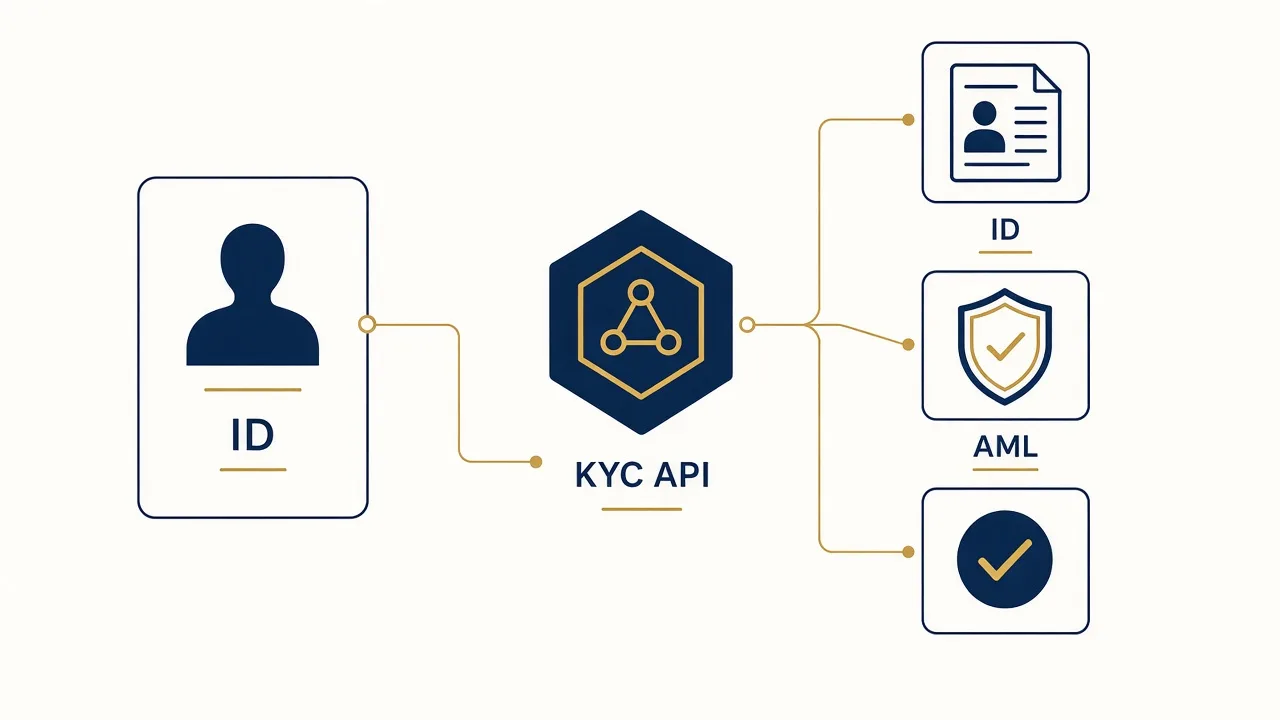
What Is a KYC API? Guide Before You Build Onboarding
Quick Answer: A KYC API (Know Your Customer API) is a programmable interface that lets businesses embed identity verification, document checks, and AML screening directly into customer onboarding—so teams can...
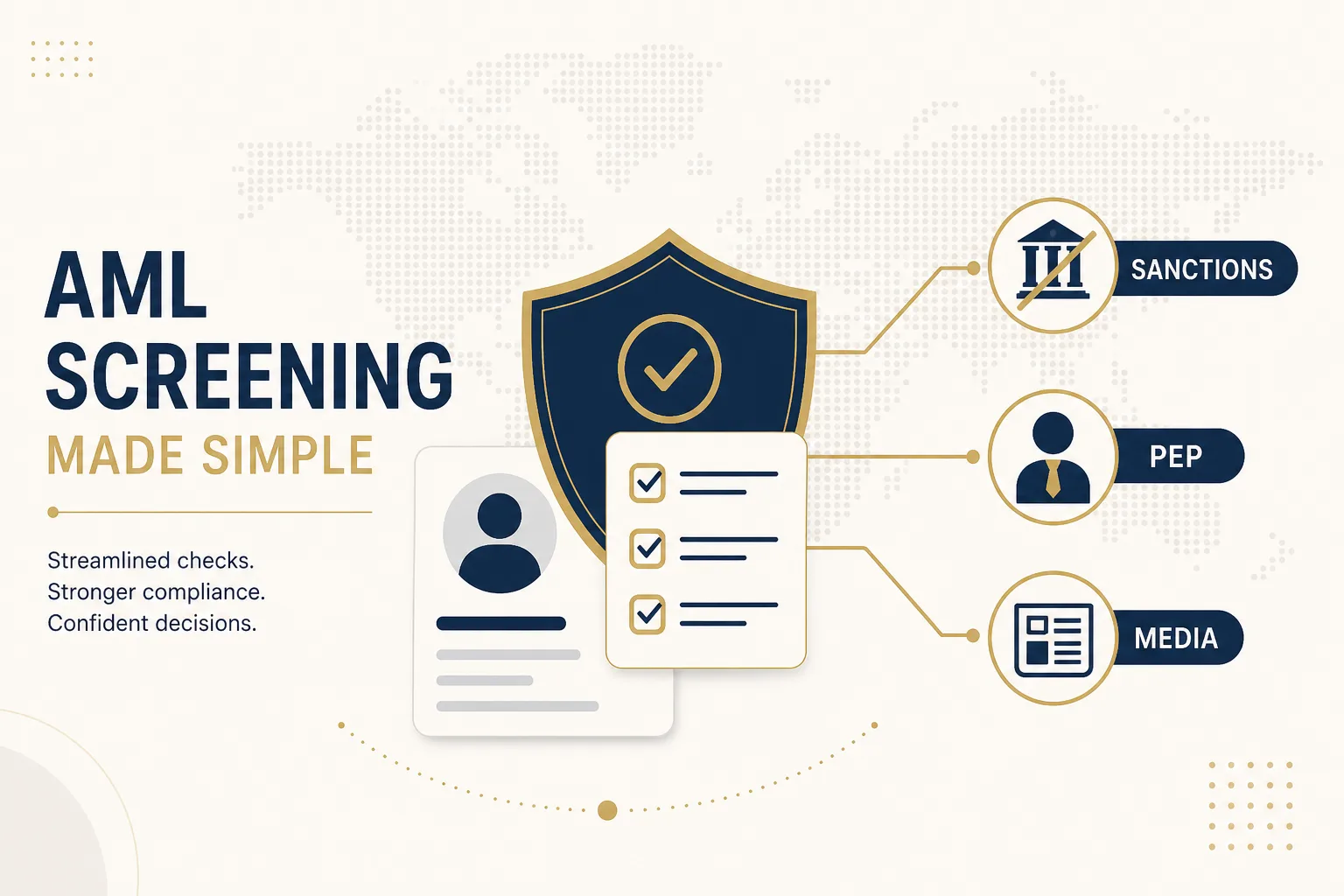
Top AML Screening Tools: Compliance Made Simple
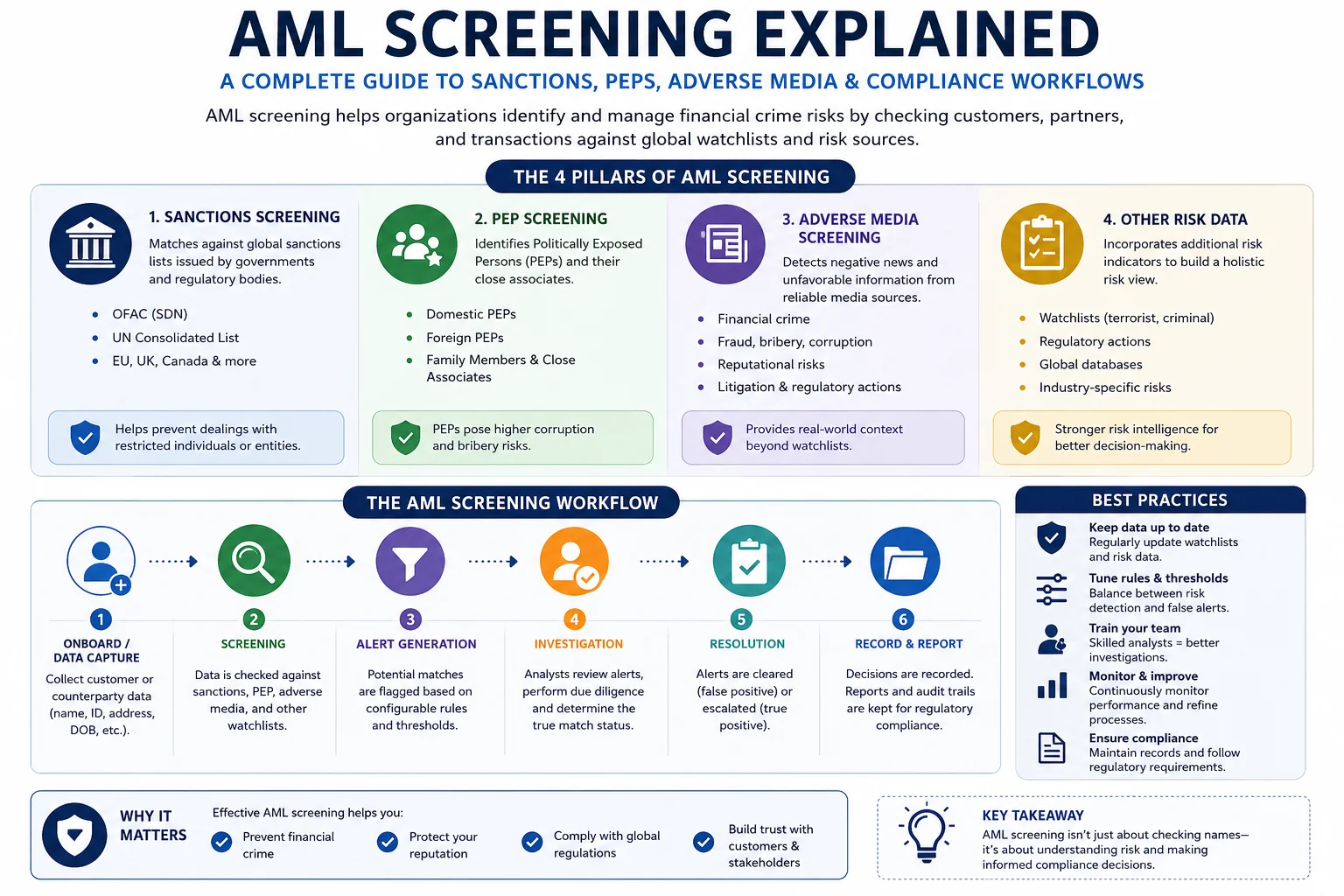
AML screening tools check customers, businesses, and beneficial owners against sanctions lists, politically exposed persons (PEP) databases, watchlists, and adverse media so regulated organizations can detect financial crime risk during...
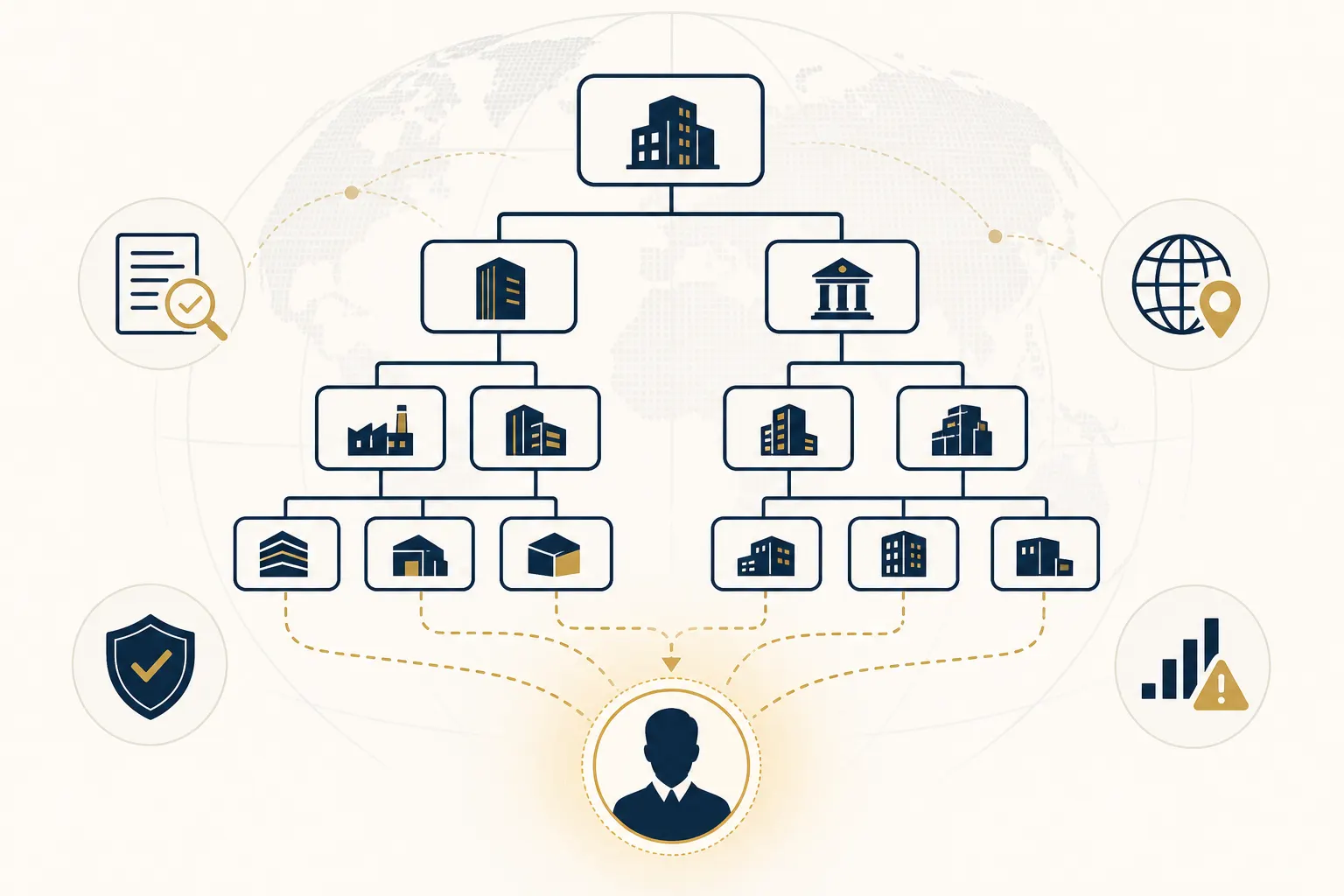
Complex Ownership Structures Explained: Hidden UBO Risks
In modern AML and KYB compliance, one of the hardest challenges is ownership structure mapping across complex ownership structures. Businesses rarely operate with simple, direct ownership anymore. Instead, they are...
UBO Discovery for Fintech: Payment Provider Compliance Guide
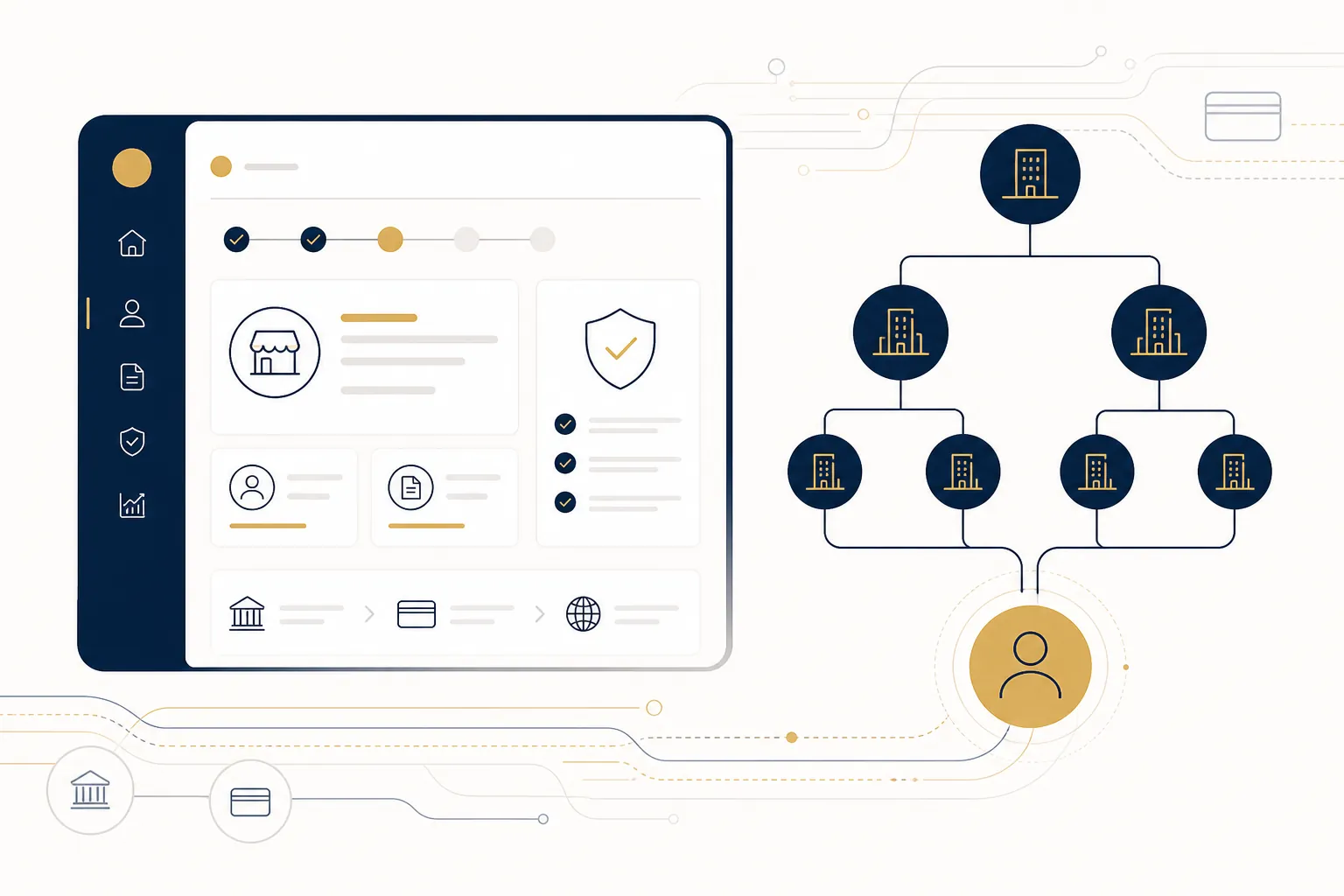
Fintech companies, payment service providers (PSPs), digital banks, and crypto platforms operate in one of the highest-risk compliance environments. They onboard merchants quickly, process large transaction volumes, and often serve...
Beneficial Ownership Tracing: Why Manual Checks Fail
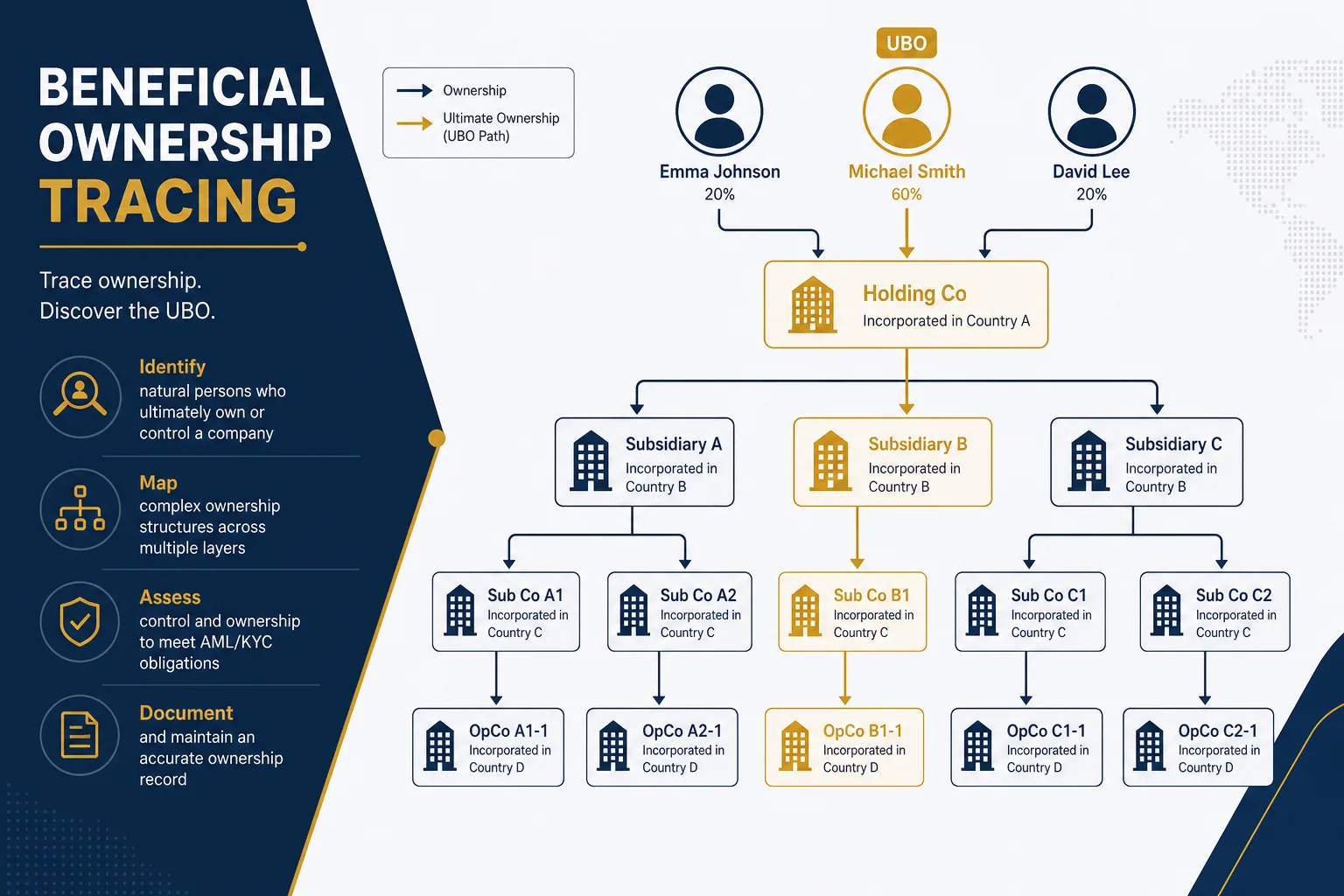
Beneficial ownership tracing is the work of following ownership and control relationships until you identify the natural persons who ultimately own or control a company—the ultimate beneficial owners (UBOs). It...

UBO Requirements Guide: Global Identification & Verification
Ultimate Beneficial Owner (UBO) identification and verification requirements are a cornerstone of global Anti-Money Laundering (AML) and Know Your Business (KYB) regulation. They require regulated organizations to look beyond a...

What Is AML for Fintech?
AML for fintech is the set of policies, technologies, and processes fintech companies use to detect, prevent, and report money laundering. It typically combines identity verification (KYC), business verification (KYB),...

What Is AML Automation?
AML automation is the use of technology, APIs, and intelligent workflows to automate Anti-Money Laundering (AML) processes such as customer screening, identity verification, risk assessment, transaction monitoring, and ongoing monitoring....
What Is UBO Identification?
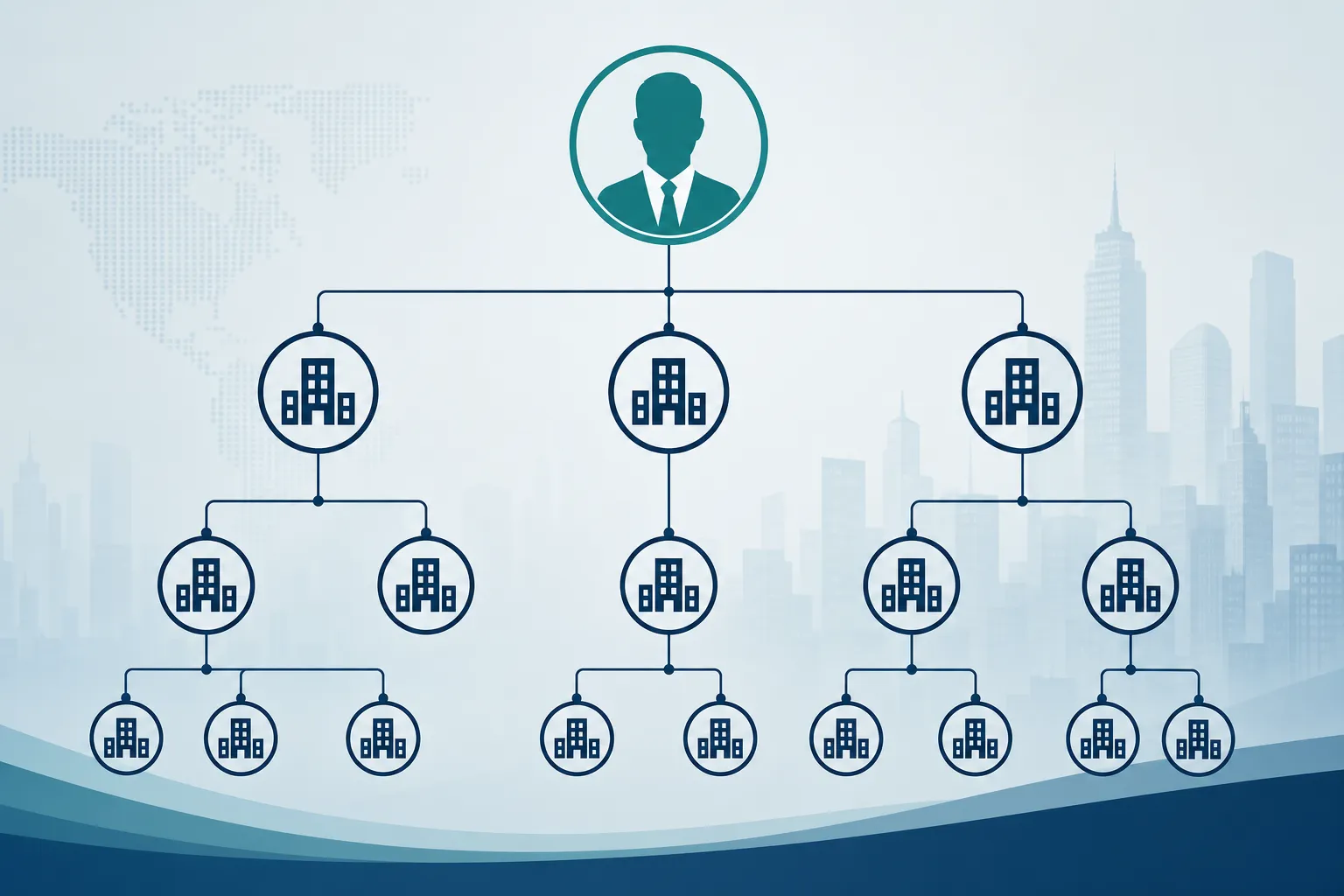
UBO identification is the process of determining the natural person or persons who ultimately own or control a business entity. A UBO (Ultimate Beneficial Owner) is typically an individual who...
Why AML Teams Drown in False Positives (And How Modern Platforms Fix It)
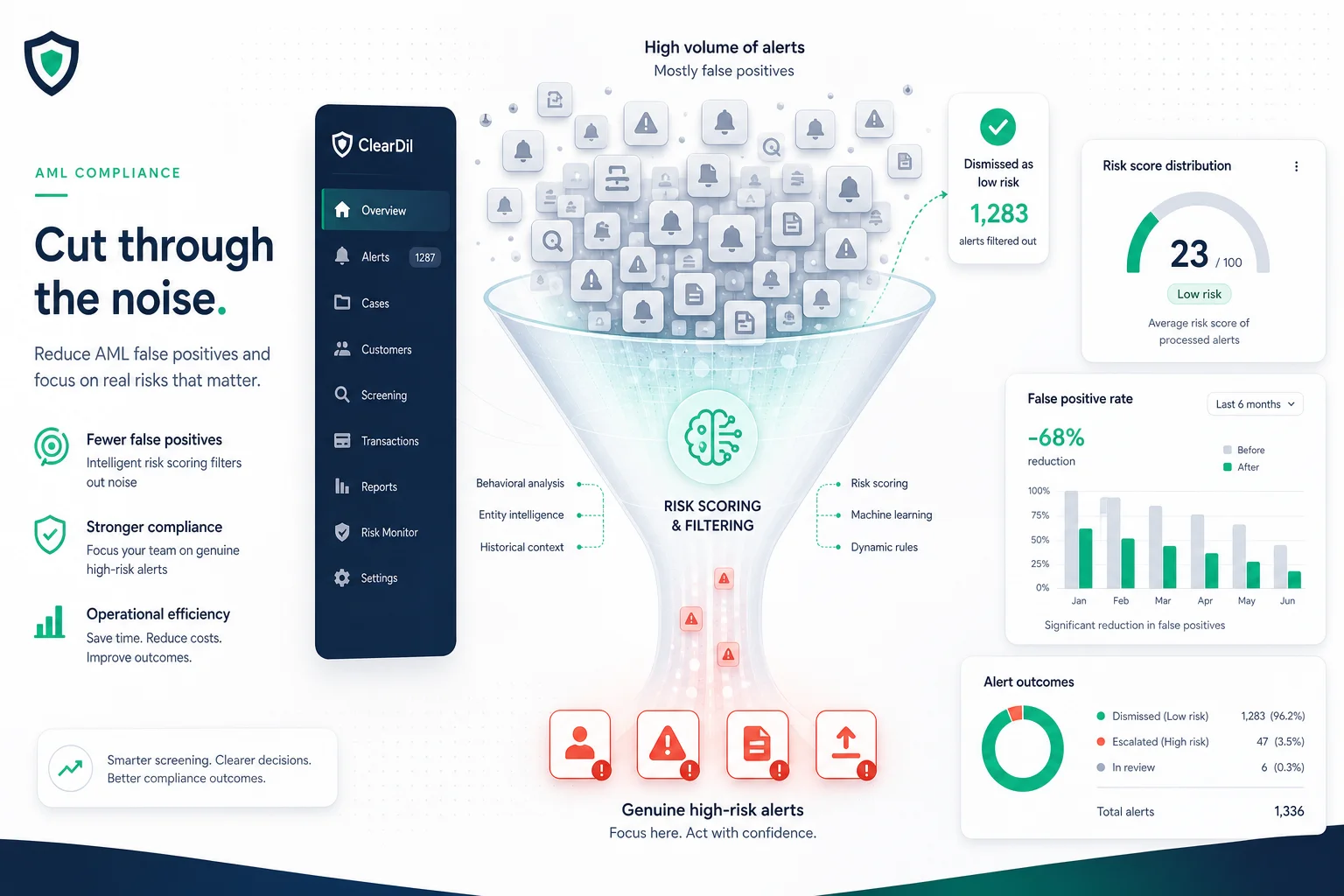
AML false positives are one of the most persistent drains on compliance operations. When screening and transaction monitoring systems flag innocent customers and transactions, investigators spend hours on cases that...
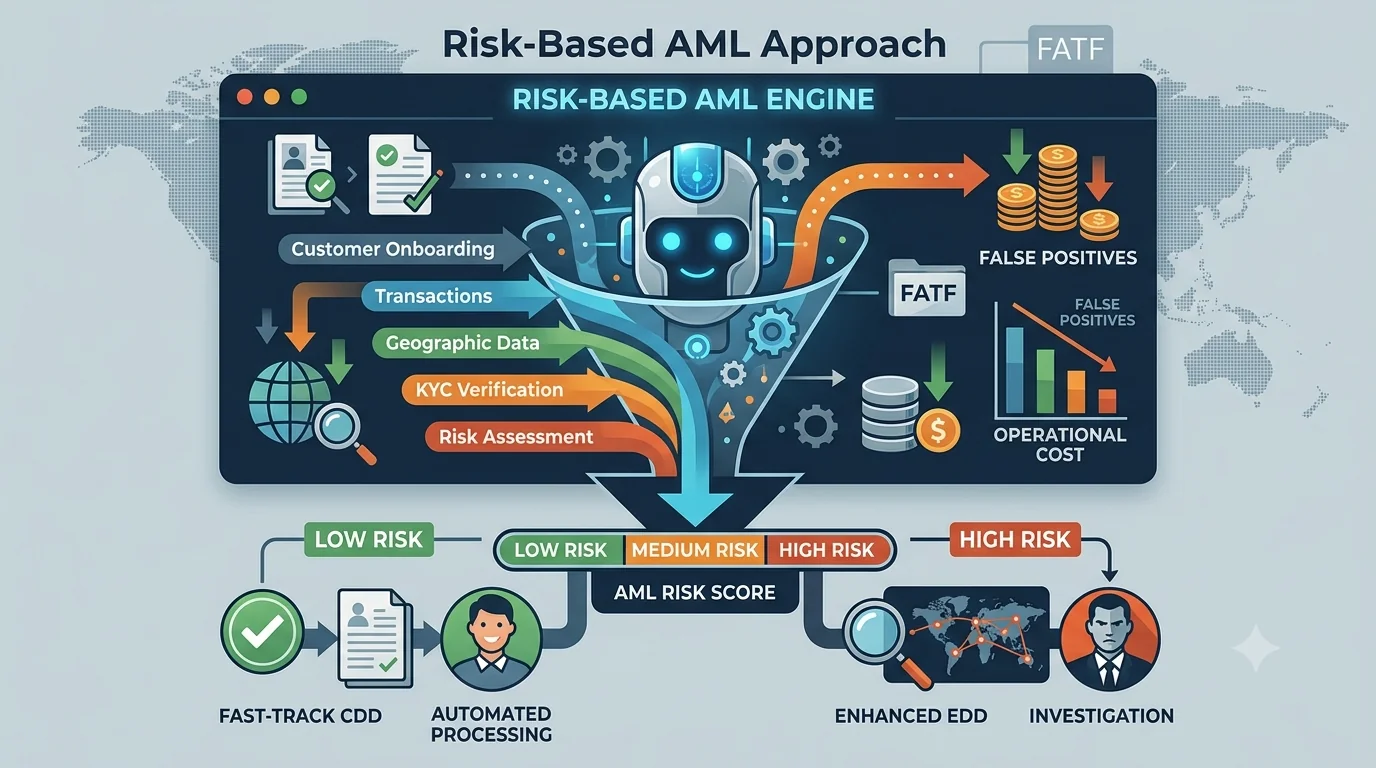
How a Risk-Based AML Approach Reduces Compliance Costs and False Positives
A risk-based AML approach is a compliance methodology that allocates Anti-Money Laundering (AML) controls according to the level of risk posed by customers, businesses, transactions, and jurisdictions. Rather than treating...